
I had visited Bangkok in the 1970’s while in the U.S. Air Force but Pat had never been. I had never visited the northern cities of Chiang Rai and Chiang Mai. We were both looking forward to this adventure. We selected an Alexander and Roberts tour called Hill Tribes of Thailand.
Thailand is 12 hours different from Chicago and with plane changes in Taipei it was about 21 hours of travel. Pat had heard good things about EVA Airlines based in Taiwan so we gave them a try. We were not disappointed.
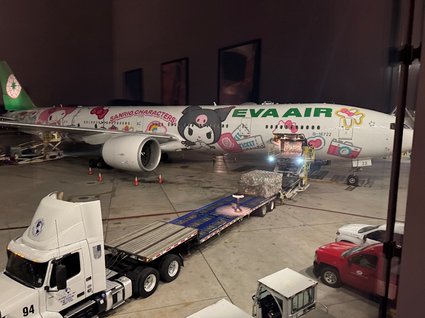
The plane we boarded in Chicago was painted like a child’s toy. We saw this same theme at the airport in Taipei.
Upon arrival in Bangkok we were met by an Alexander and Roberts representative. Once we cleared customs and immigration, we met Grace who was to be our guide for the Bangkok portion of our trip.
There was only one other person on the trip. Apparently one other couple was scheduled but they canceled at the last minute.
We were driven to the Shangri-la Hotel about 45 minutes from the airport and right on the Chao Phraya River which runs through the middle of Bangkok.
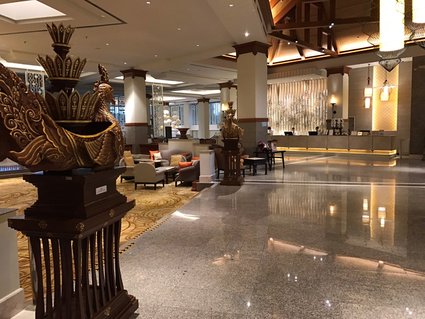
The lobby of the hotel is beautiful and they had a swimming pool so Pat could get her exercise.
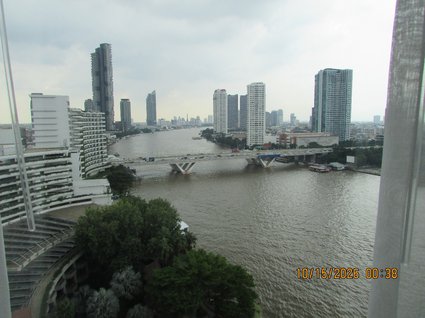
Bangkok Thailand is a very large city with a population of 9.1 million people and is spread out over 600 square miles. We were surprised at how long it took to drive anywhere out of the city. Here is a view of the river and a small part of the city from our hotel room.
We arrived two days before our scheduled tour began so we could overcome some jet lag and get ourselves oriented. One of the things on our list to see was the Jim Thompson House Museum.
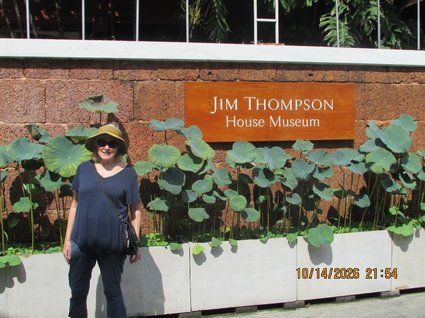
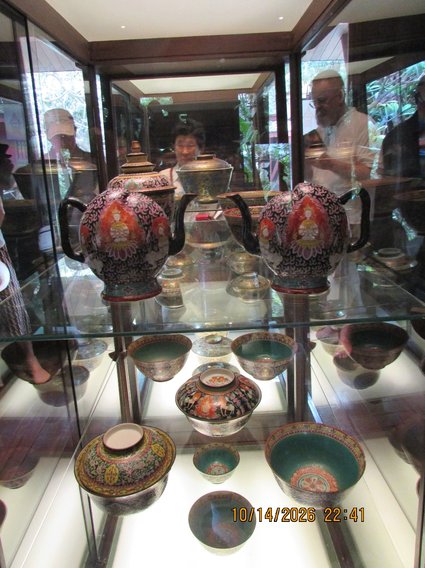
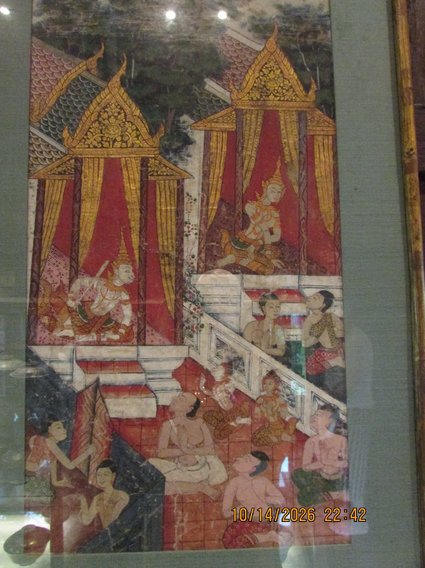
Jim Thompson first served in the U.S. Army and then joined the CIA. He relocated to Bangkok and established the Thai Silk Company Ltd. in 1948. Thompson became a major collector of Southeast Asian art, which was not well known among Westerners at the time. Attracted by the subtlety of their craftsmanship and expression, he built a large collection of historical Buddhist statues and traditional Thai paintings made of wood, cloth, and paper that depicted the life of Buddha and the legend of Vessantara Jataka. He collected secular art not only from Thailand but from Burma, Cambodia, and Laos, frequently travelling to those countries on buying trips. His collection also consisted of white and blue porcelain from China, which made its way into Thailand around the 16th and 17th centuries.
After Thompson's disappearance in Malaysia in 1967, the house came under the control of The James H. W. Thompson Foundation under the royal patronage of Princess Maha Chakri Sirindhorn.
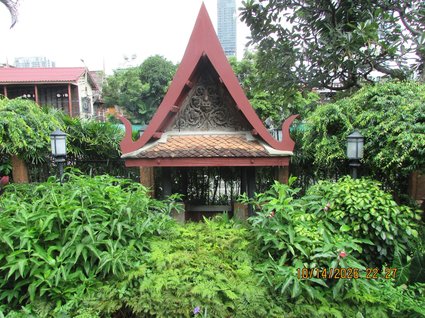
The grounds of this house were beautiful.
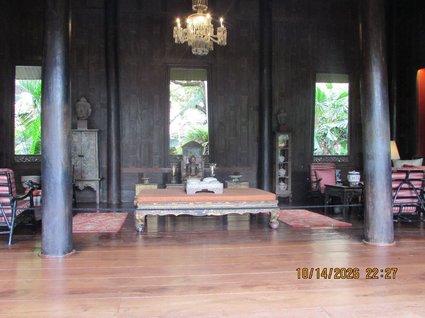
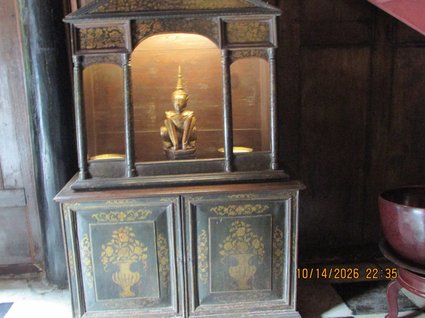
Below is a small sample of the art collection. If you ever visit Bangkok this is a museum to have on your list.
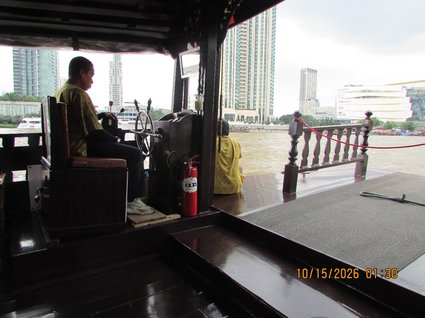
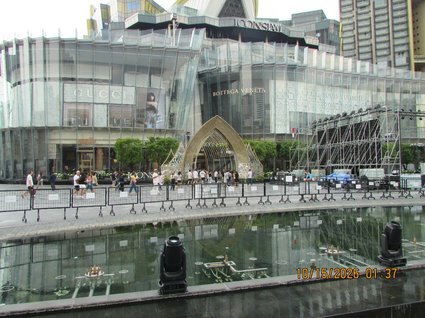
Once we returned to our hotel, we took a scheduled taxi boat service across the river to the high-end shopping mall just to look around.
Back at our hotel, Pat went for a swim then we enjoyed dinner at our hotel and called it a night.
August 15 2026 - Bangkok
After breakfast we were met by Grace to tour the Grand Palace at Wat Phra Kaew, home to the famed Emerald Buddha.
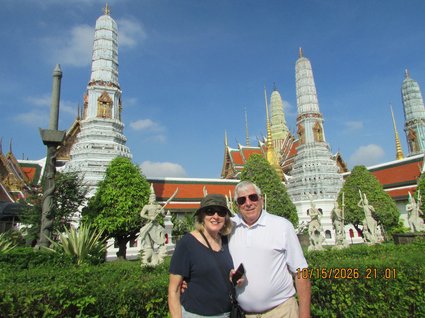
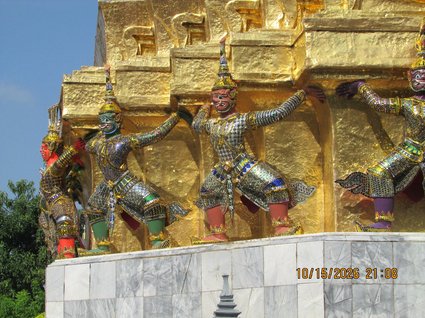
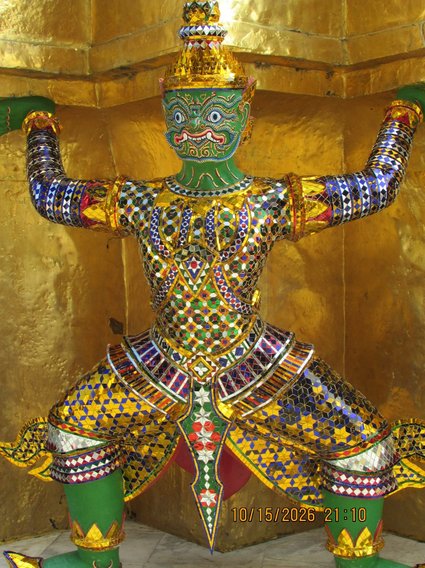
Next we visited Wat Pho which is one of the largest temples in Thailand. In Thai, Wat means a temple or monastery.
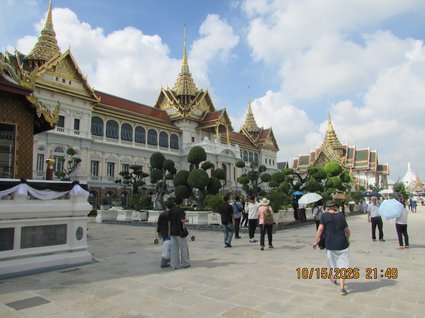
Wat Pho, one of the city’s largest temples. In addition to being one of the country’s oldest institutions of learning, this spectacular complex is home to beautiful murals, ornate architectural detail and an enormous 150-foot long gilded image of a reclining Buddha.
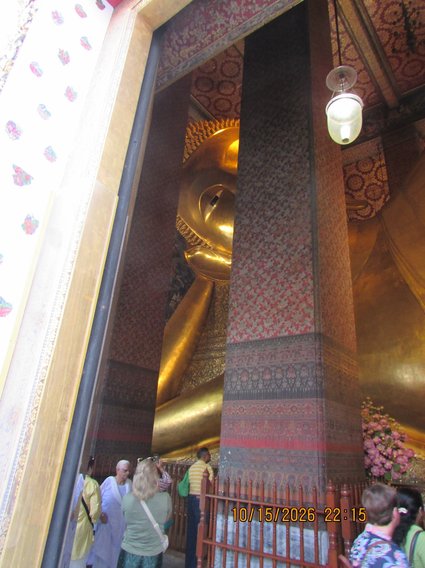
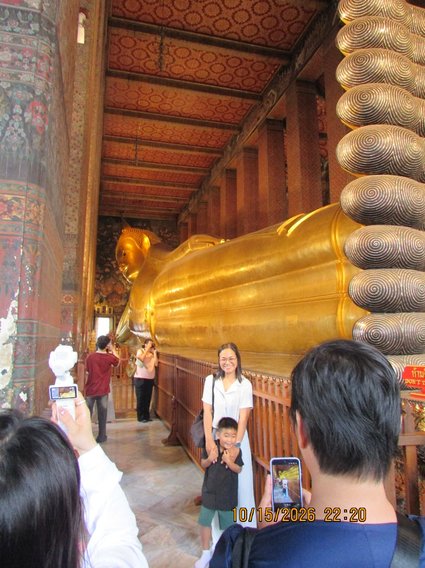
The grounds were just beautiful and we had a chance to walk around with Grace.
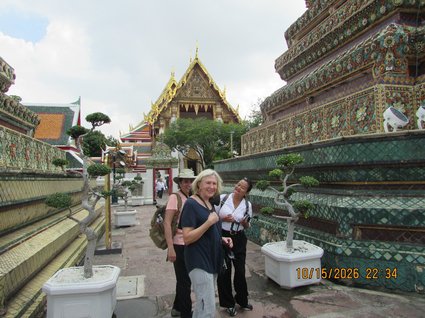
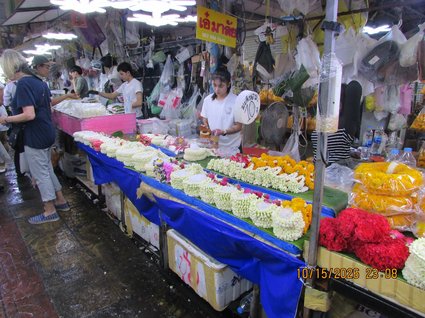
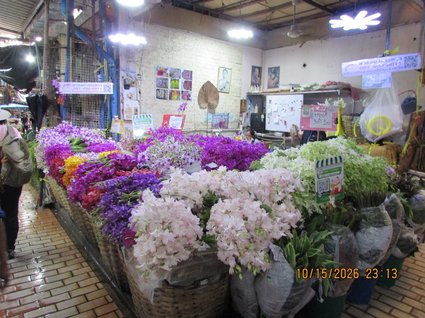
From here we traveled a short distance to what is called the Flower Market. Inside were stalls selling all sorts of fruits and vegetables, mostly at wholesale for restaurants and other vendors.
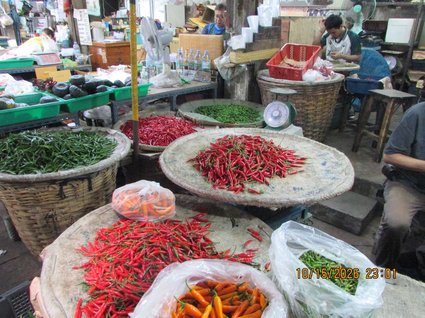
There were also large quantities of flowers, some arranged and some just bulk.
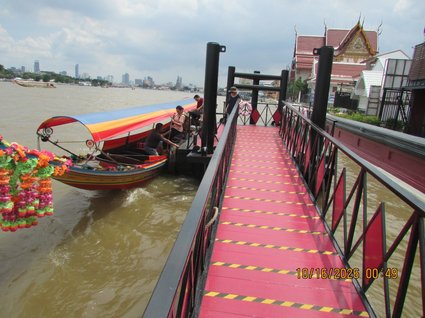
For lunch we boarded a small boat to go to the Supatra River House. This was our first encounter with one of these Long-Tail speed boats that are used everywhere for travel on the river. They have very powerful, automobile engines with a long propeller shaft to deal with very shallow water.
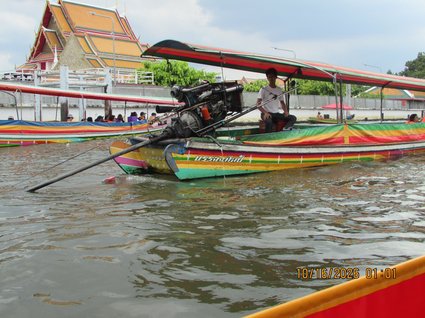
They are not easy to enter and exit.
After lunch, our tour continued with an excursion along Bangkok’s famous Klongs. The water level was higher in the river than the Klongs which were protected by locks. These are slow moving barricades that are raised and lowered allowing only 8 boats and a time to enter or exit. We sat waiting our turn for about ½ hour.
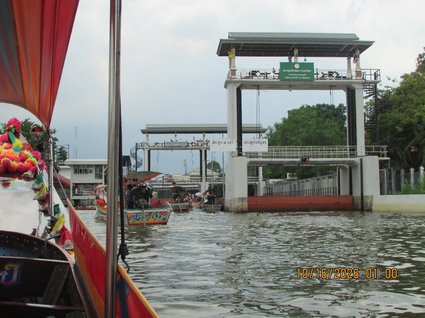
Along one of these waterways we explored the Khlong Bang Luang Artist Village, a small enclave of traditional wooden homes that are now home to studios, galleries, cafes and shops.
Back on the Chao Phraya River we visited the magnificent Temple of Dawn (formally the Wat Arun Ratchawararam). This ancient temple has existed since the 17th century.
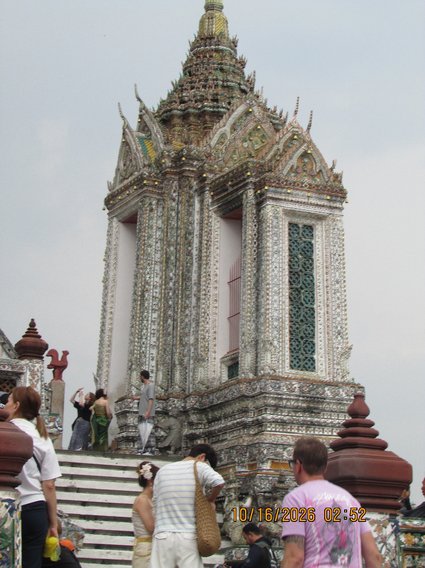
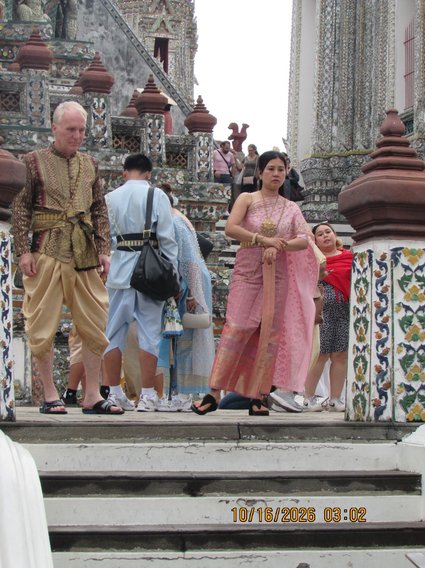
This was the first time we encountered local citizens dressing up for photographs in very fancy, traditional (rented) wardrobes.
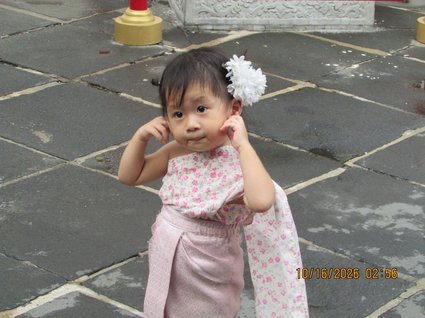
Even the little ones.
We returned to our hotel for Pat to swim and for us to enjoy dinner.
October 16, 2026 - Bangkok
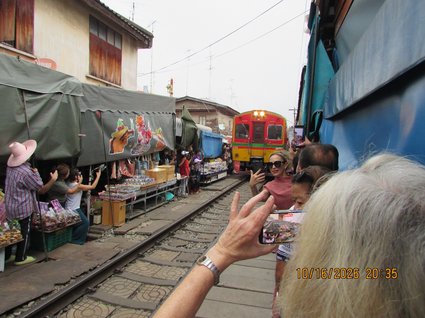
After breakfast we visited Bangkok's famous Railway Track Market. Local merchants come daily to set up their stalls along 100 yards of train track. Up to 8 times per day, vendors and shoppers alike have to scramble fast to avoid the passing trains.
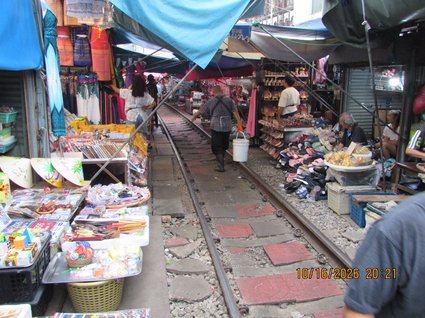
When the train comes, all the awnings come down, merchandise is pulled back, and everyone retreats behind yellow lines.
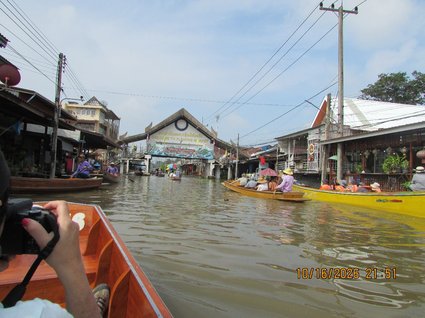
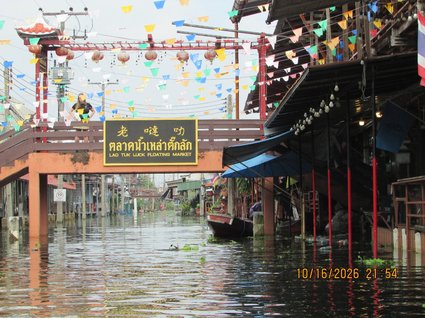
We then drove to Ratchburi Province and visited the floating market at Damnoen Saduak, one of the country’s busiest and most colorful. Hundreds of vendors ply the canals in their traditional wooden boats selling everything from tropical fruits and produce to daily staples and, of course, souvenirs.
On the way back to Bangkok, we stopped at a local sugar palm farm for insight into how this sweetener is produced.
October 17, 2026 - Bangkok
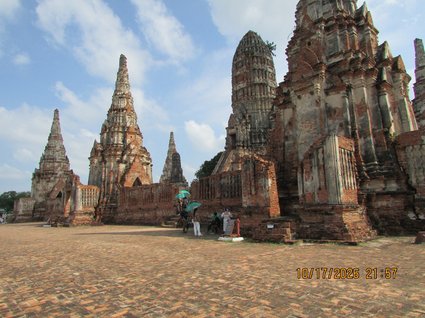
This morning we visited Ayutthaya city island, where vast ruins bear witness to the splendor of the ancient kingdom of Siam that flourished from 1350 until 1767.
This was a royal temple complex during the Ayutthaya Period during the reign of King Prasart Thong.
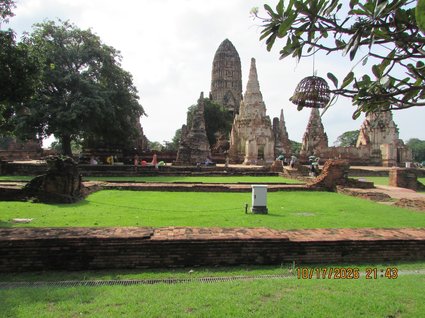
This was the holiest temple on the site of the ancient Royal Palace and its still intact stupas attest to Ayutthaya’s former glory.
From there we reboarded our van and drove 3 hours to Kanchanaburi, which is the site of the notorious bridge over the River Kwai.
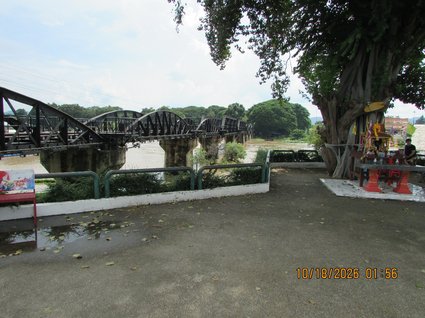
This is one of the great engineering feats of the Second World War. Asian laborers and prisoners of war moved 7 million cubic meters of earth and rock in constructing the 415 kilometer railway.
This famous steel bridge was built between October 1941 and May 1942 using eleven 21 meter prefabricated spans plundered by the Japanese from Dutch Java. At the same time a wooden trestle bridge was built 900 meters downstream; this was the bridge referred to in the movie.
Both bridges transported men and materials north to construction camps and later to battlefields in Burma.
There is a museum with a sample railcar used to transport prisoners. The museum includes many artifacts retrieved from the scene.
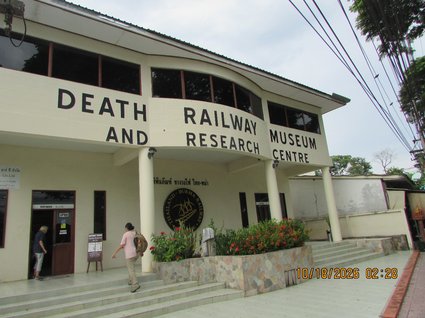
Outside the museum is a large cemetery for the many soldiers from many nations who died constructing the railway.
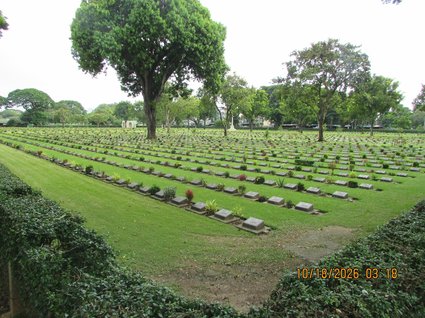
From here our van drove about an hour to a pier where we boarded another Long-Tail boat for a trip upriver to the Float House on the River Kwai where we would spend two nights.
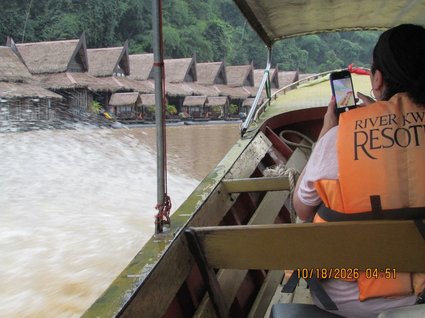
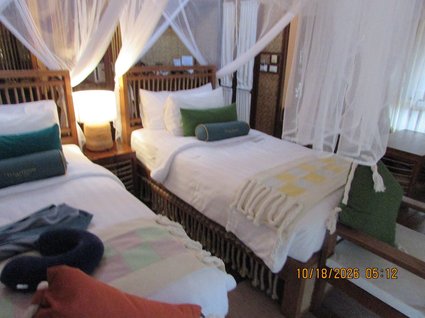
The rooms were cozy but nice.
We enjoyed a buffet dinner at the restaurant which was part of this floating hotel.
October 18, 2021 – River Kwai
After breakfast we again boarded a Long-Tail boat to visit an island temple.
When this river floods, it can rise more than 10 feet over our heads so there is little in the way of permanent structures for docks. Walking along these make-shift accommodations is precarious.
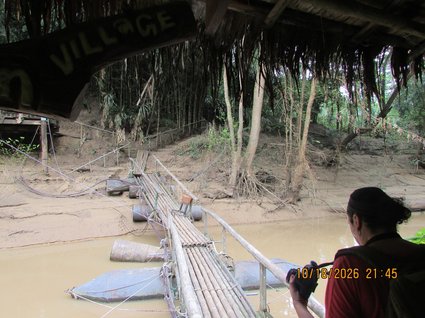
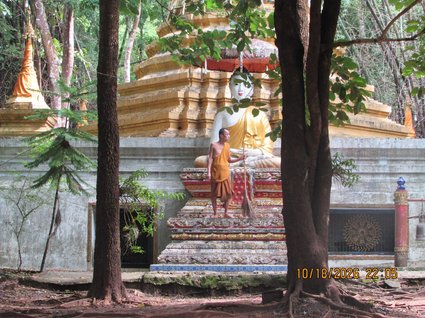
We visited the Mon tribal village. The temple was well hidden deep in the forest. There was a monastery here as well with monks in residence.
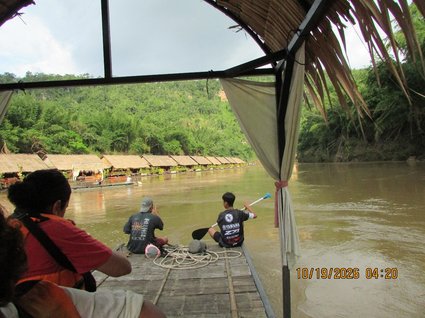
We got back into the Long-Tail boat (very difficult EVERY time) for a trip along the river. This time we arrived at a dock where we boarded a raft for a quiet trip down the river.
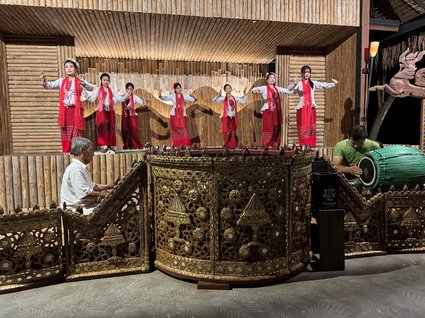
In the evening, a brief Long-Tail boat ride away there was local cultural dance performance.
October 19, 2026 – River Kwai to Chiang Rai
Following breakfast we checked out of the Floating Hotel, boarded yet another Long-Tail boat for the trip back to the dock. Here we met our van for the long ride to the Bangkok airport.
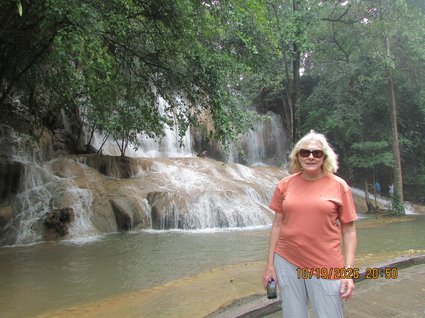
Along the way we stopped at the Sai Yok National Park which had beautiful waterfalls.
Back in Bangkok we boarded a local airliner for a one hour flight to Chiang Rai.
We drove from the airport to Chiang Rai and checked into The Riverie Hotel.
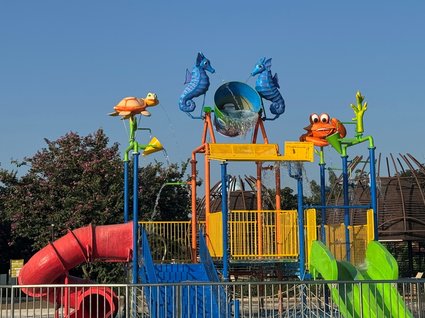
The Riverie had a fabulous swimming pool so Pat was delighted. There was a section of the pool for children with a water feature that filled a large bucket that every 2 or 3 minutes would dump its contents over everyone in the play area.
October 20, 2026 – Chiang Rai
Following breakfast, it was a short drive to the White Temple.
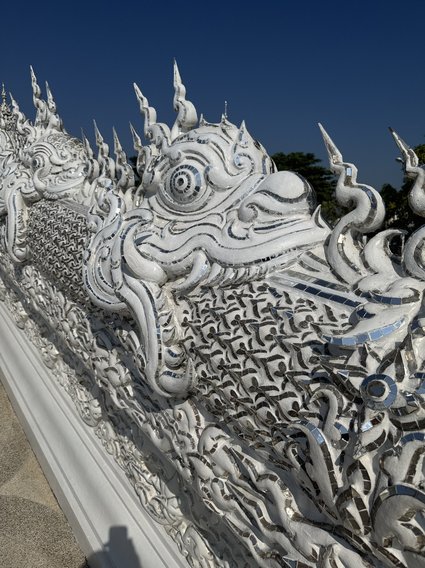
This Buddhist temple diverges from the traditional gold and red, as it appears to be made of porcelain, a dazzling effect achieved through a combination of whitewash and transparent mirrored chips.
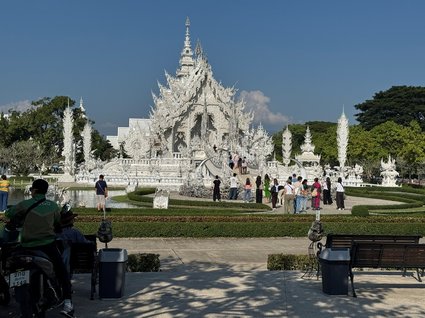
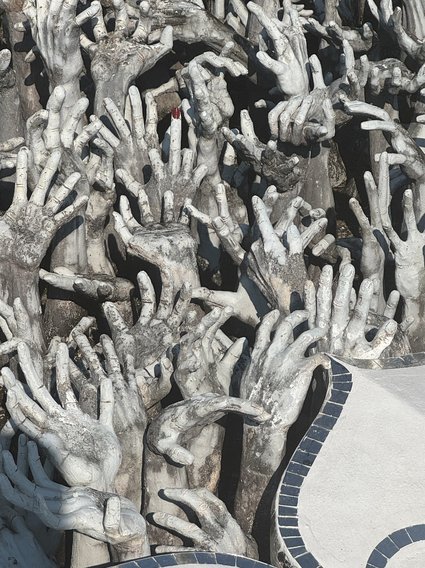
The design of the temple goes from the top which is nirvana down through various reincarnations throughout until you descend into hell. Below are displayed the hands of souls in hell reaching out for a better incarnation.
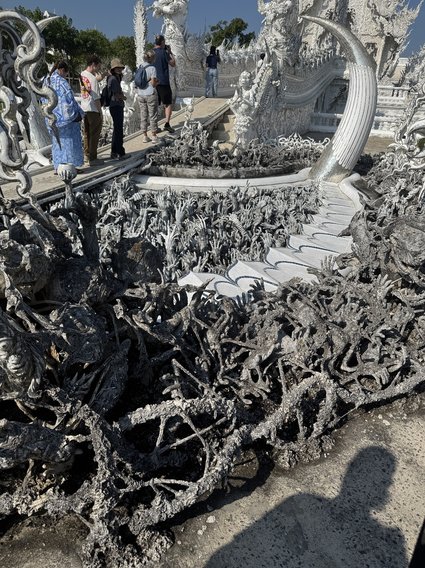
Notice the one hand with a red painted fingernail.
The detail of colored glass pieces imbedded into the white porcelain gives a stunning appearance.
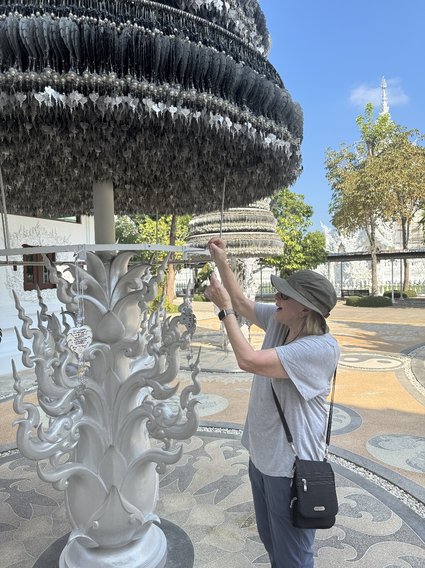
There was an opportunity to make a wish, write it on a metallic heart and hang it on this ornamental tree. Here Pat made her wish.
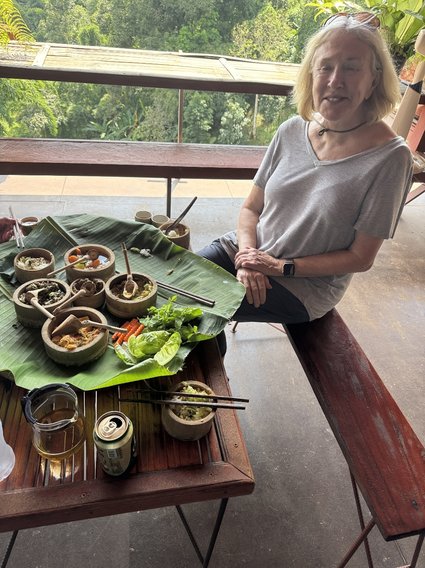
From here we traveled into the countryside to visit the Akha Hill Tribe in their small village. We were hosted by the local mayor and his family who treated us to lunch.
After lunch, the mayor took us for a brief walk through his community. The walk was on a narrow dirt path that was nearly vertical. We got part way back up and our van came to meet us.
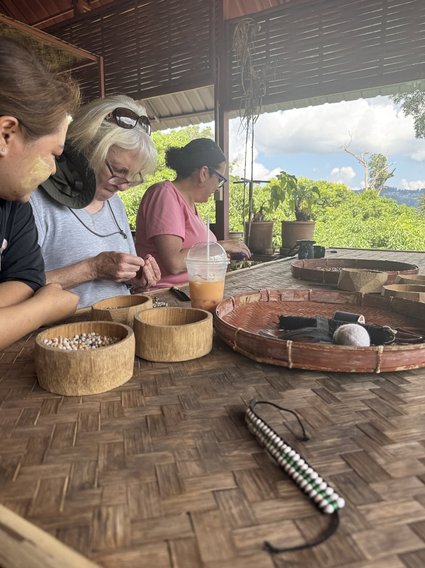
Back on top we got a lesson in beading bracelets.
October 21, 2026 – Chiang Rai to Chiang Mai
This morning we left our hotel and drove toward Chiang Mai but stopped and spent the night in Mae Tang, a rural community tucked in the city’s surrounding hills to visit a Lisu village.
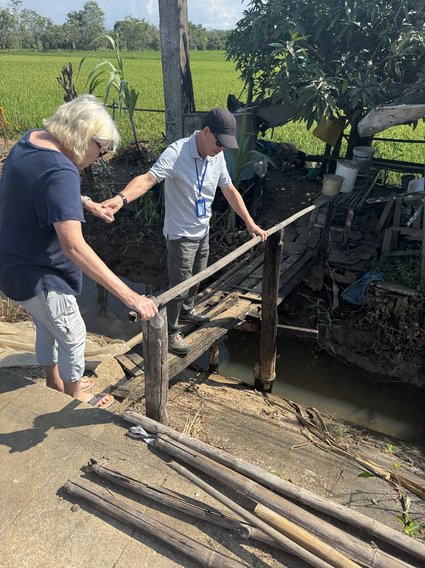
Along the way we stopped at a rice plantation. There was an extremely rickety bridge over an irrigation ditch to reach the paddies.
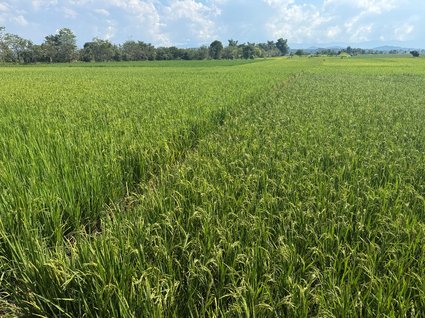
The rice paddies went on forever and were very near ready for harvesting. We were told that all harvesting is done by hand.
The Lisu village is in the middle of nowhere and along a dirt, potholed driveway to a group of cabins.
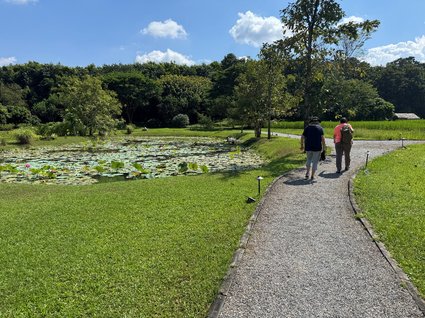
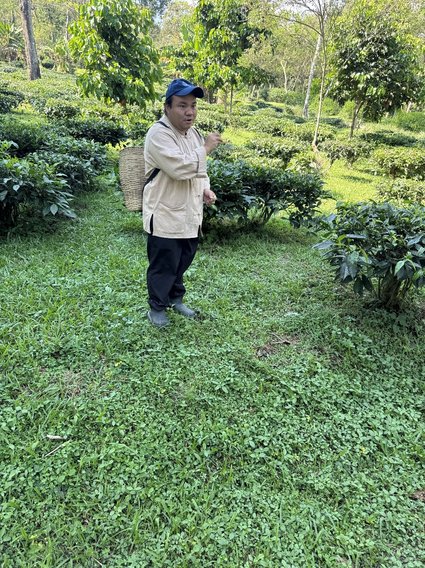
After check in, we drove to the Araksa Tea House. Here we got a lesson in three varieties of tea grown in the area.
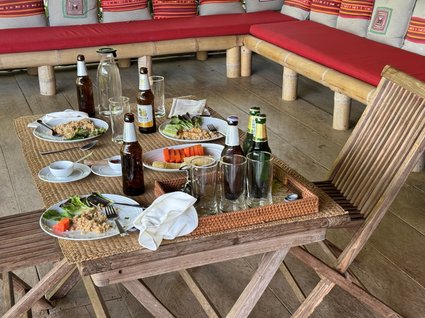
Upon returning to the Lisu Lodge, we discovered there were no restaurants and no way to get to one if there were. Puzzlingly, this was one of the few nights where the tour listed “dinner on your own”. So we ordered and paid for dinners and beer and settled in for the evening.
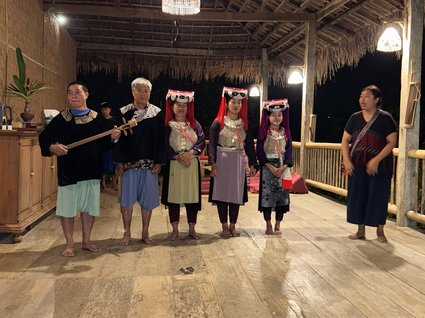
Before bedtime, we were serenaded by a small group who performed native dancing. The two women in our group joined into the dancing.
October 22, 2026 – Chiang Mai
This morning we checked out of the Lisu Lodge and drove to the Elephant Nature Park, one of the elephant preserves in Thailand. Here they rescue elephants from circuses, logging camps and other places where they have been neglected and/or abused.
The parks provide sanctuary for rescued elephants and operate under a business model in which tourists pay to visit and help care for the animals, and they can stay for extended periods. In addition to its elephant rescue work, the sanctuary has expanded its focus to include rehabilitation and care for other rescued animals such as dogs and water buffalo, reflecting its broader mission of compassionate wildlife protection.
Lek Chailert started working on elephant conservation in 1996. Teak logging, in which many elephants were used, was banned in Thailand in 1989, and those elephants had been abandoned or sold for use in the tourist industry or for begging in cities. Elephants were also left maimed after poachers took their ivory tusks.
As of 2016, Chailert had rescued a total of 200 distressed elephants, and there were branch elephant parks in Surin and in Cambodia, as well as plans to open a fifth park in Phuket. That work is coordinated by the Save Elephant Foundation, run by the same people. Chailert has also been successful in convincing several independent camps to improve the lives of elephants and forbid tourists from riding them, through her “Saddle Off!” outreach program.
Elephants eat 200 to 400 pounds of food every day and spend most of the day, about 18 hours, eating.
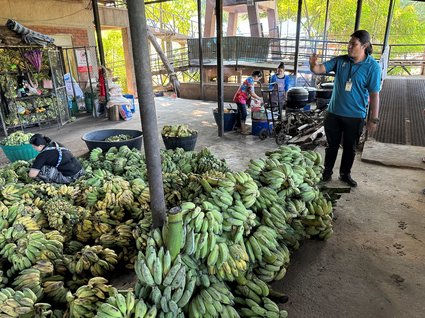
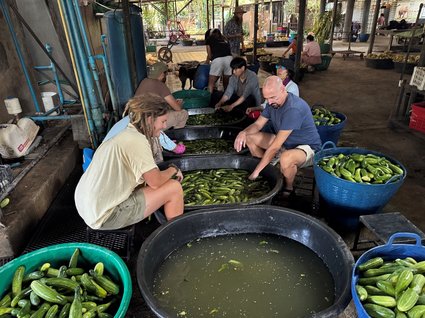
Preparing food was a large operation with many volunteers.
With our guide, we got to walk among these beautiful but abused animals. Our guide introduced each animal with a story of how old they were, where they came from, and their injuries and/or handicaps.
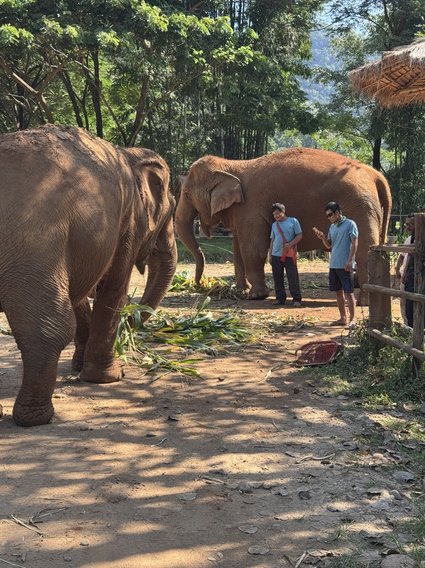
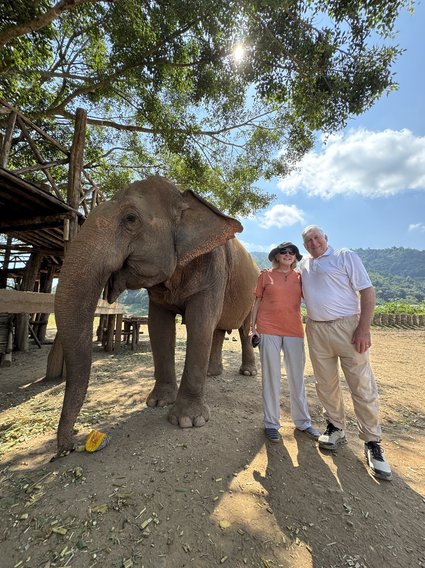
Pat and I agree that the visit to this elephant sanctuary was the highlight of the trip.
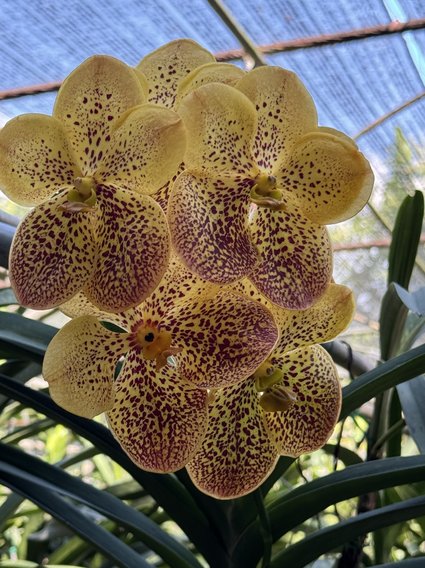
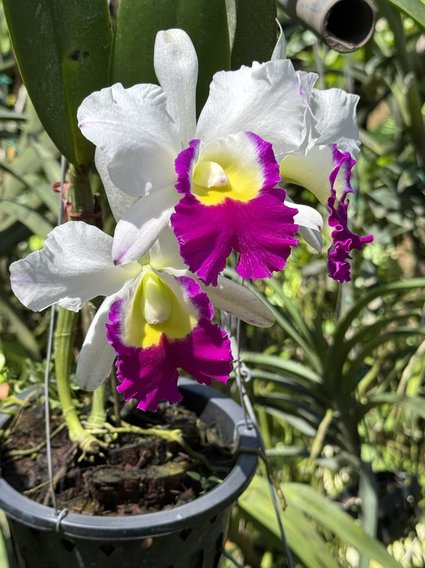
From the sanctuary we drove about 2 hours toward Chiang Mai but stopped at an orchid greenhouse. There were so many varieties with different shapes and colors.
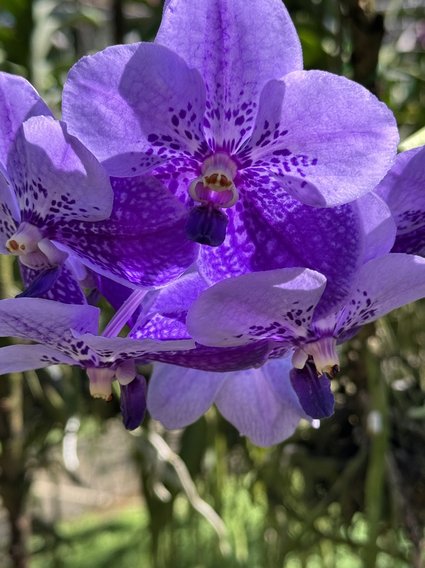
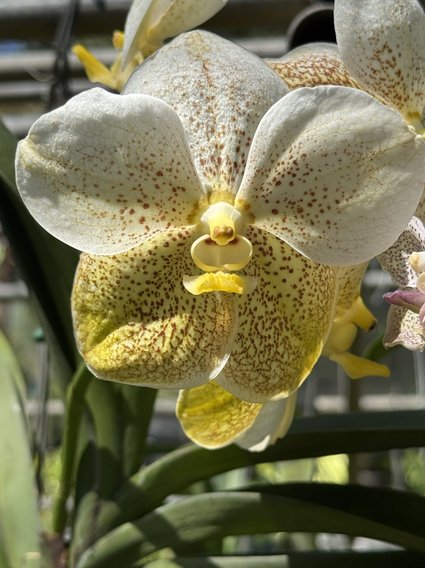
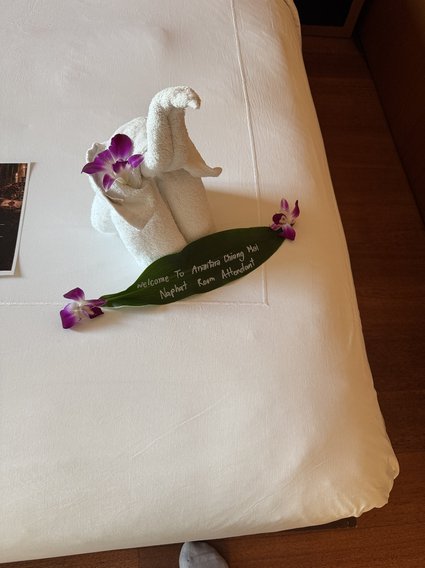
Finally we arrived at the Anantara Hotel in downtown Chiang Mai. This was the folded elephant towel decorating our bed on arrival.
October 24, 2026 – Chiang Mai
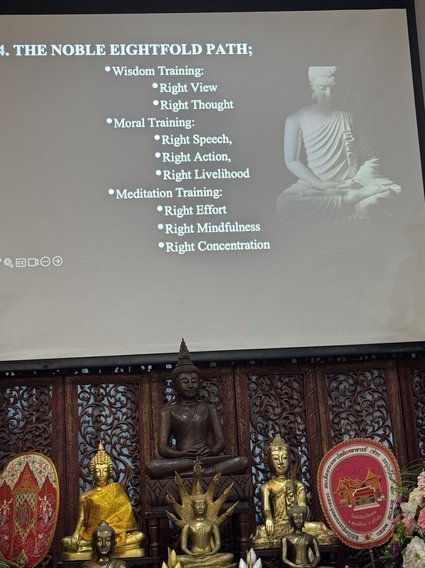
This morning we visited a local monastery where we enjoyed a two hour “Monk Chat”. This gentleman spoke perfect English and gave a presentation on the practice of Buddhism. He pointed out that the practice has no concept of a ‘higher power’. We move to higher or lower beings depending on how we live our lives with the ultimate goal of nirvana.
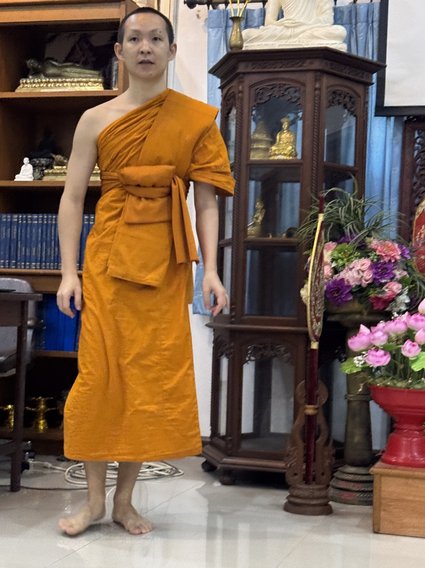
A PowerPoint presentation accompanied his discussion with this being one of the slides.
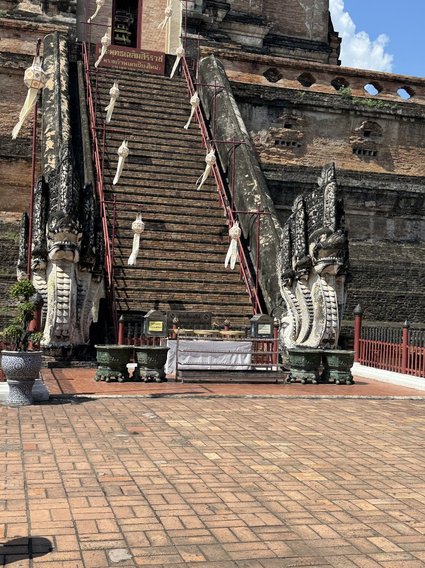
Some of the grounds were historic and in the process of being restored.
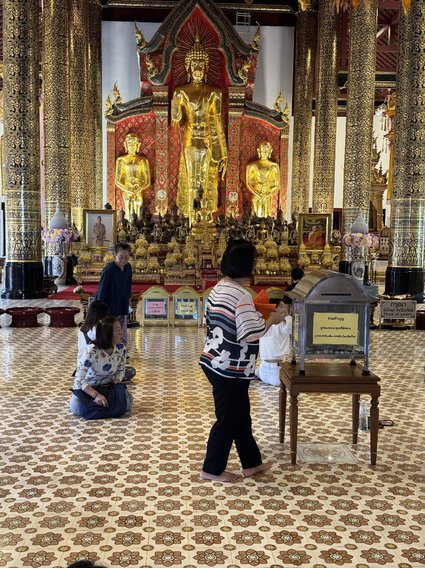
The inside was beautiful. There were monks here available to talk with people and answer any questions they might have.
We returned to our hotel but had only 2 hours this afternoon to enjoy the pool before our next adventure.
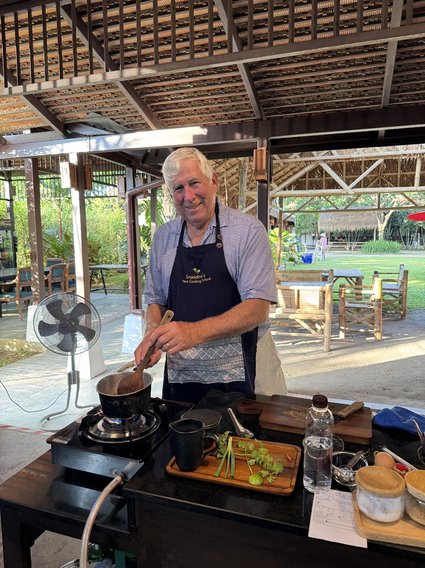
At 4:30 we were back in the van to visit Grandma’s Home Cooking School to learn Thai food preparation and cook our own dinner.
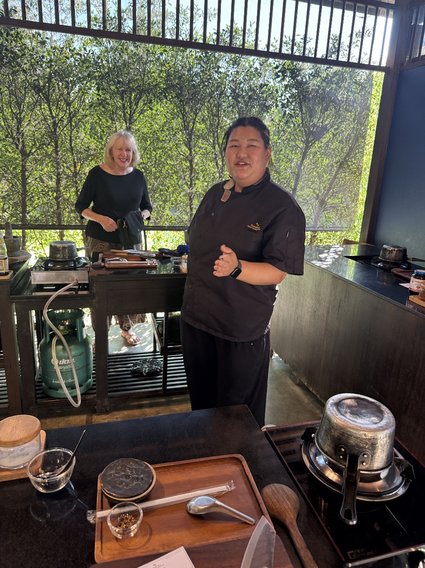
This was our instructor for the evening with my workstation in the foreground.
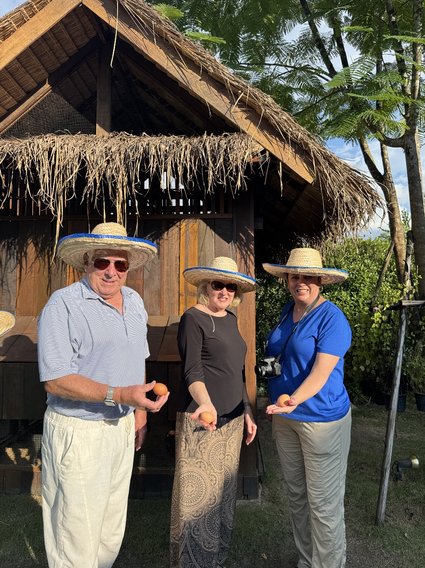
First we retrieved an egg from the hen house.
Then we went to work.
We had fun and the food was delicious.
It was dark by the time we finished and returned to the hotel. We called it a night.
October 25, 2026 – Chiang Mai
This morning we traveled to the San Khampaeng district near Chiang Mai. This area is where many of the crafts for which Thailand is famous are practiced.
We first visited a silk factory. We saw a demonstration of how the silk from the caterpillar cocoon is spun into thread and how is it dyed.
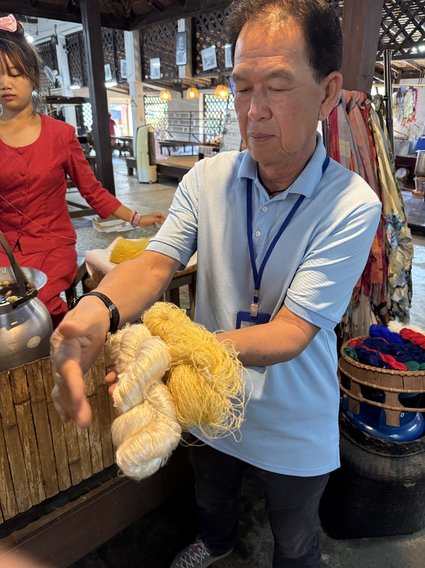
We also saw it being woven into cloth with very intricate patterns.
A graphic on the wall displayed the Silk Road from Turkey to China.
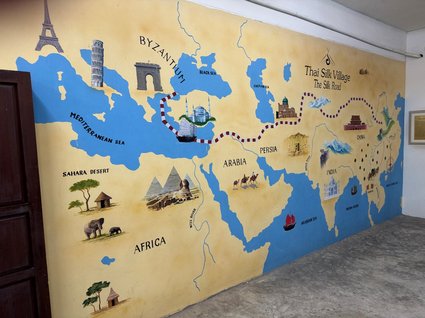
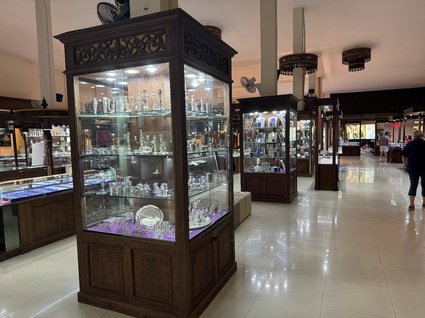
Next we visited a silver shop for a demonstration of pounding raw silver into bowls and other ornaments. The shop was beautiful but there were no bargains.
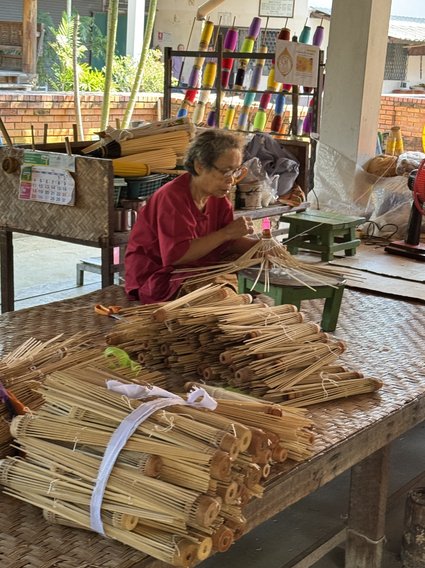
Next up was an umbrella factory where the very decorative paper Borsang umbrellas are made. They are very cleverly made by hand.
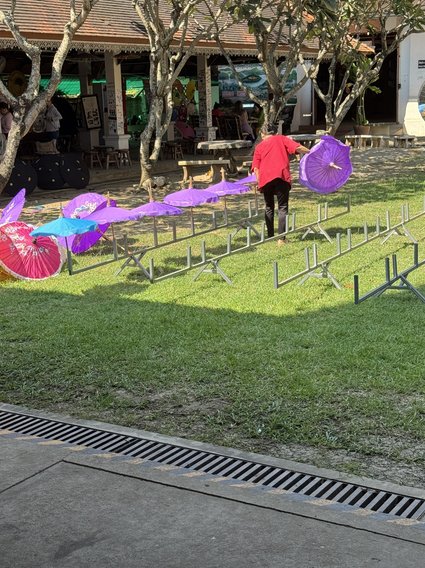
Then dyed and set out to dry.
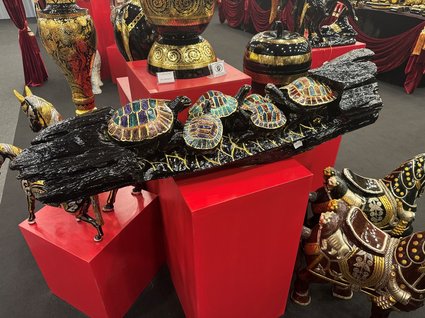
Next we visited a lacquerware factory to learn that process.
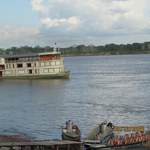
These turtles caught our eye. Just a month ago on a trip on the Amazon River, we had seen turtles line up like this on a log to sun themselves.
We then returned to our hotel and had the afternoon to ourselves. The air temperature was in the mid 90’s with high humidity so the pool provided welcome relief.
October 26, 2026 – Chiang Mai to Bangkok
Today we caught a local flight back to Bangkok and checked back into the Shangri-La Hotel. We had the afternoon off. Pat did some shopping for gifts and then swam in the pool.
This was our final evening in Bangkok and Alexander and Roberts arranged a dinner cruise on the river. The boat was quite fancy and the meal delicious.
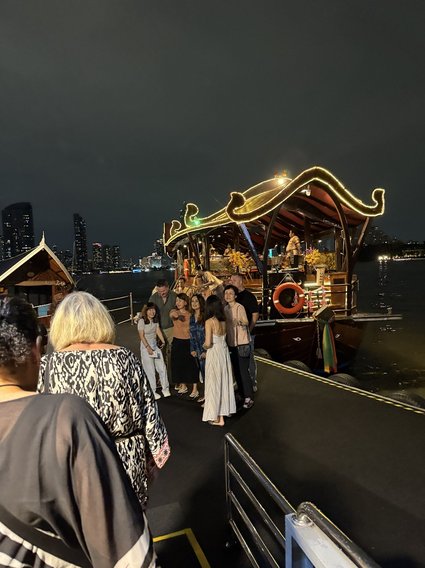
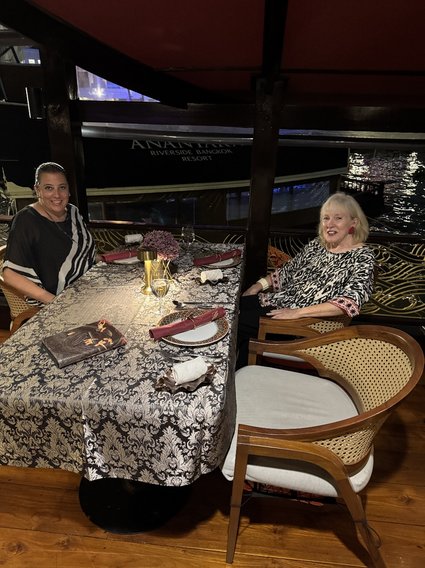
It was a beautiful night to be on the river and the city was all lit up.
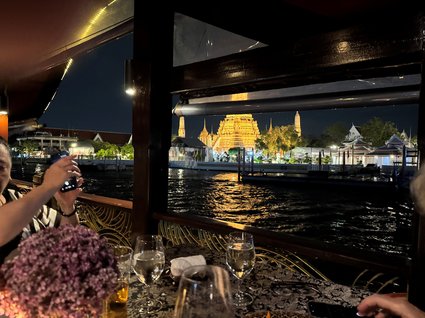
That was a wonderful end to a great trip to a very exotic country. We had fun and we learned a lot.